History
Benjamin Franklin in France: a civics answer to remember
Why is Benjamin Franklin famous? "U.S. diplomat" is an accepted answer on both civics tests. His mission to France explains what it means.

newlycitizen
3 min read
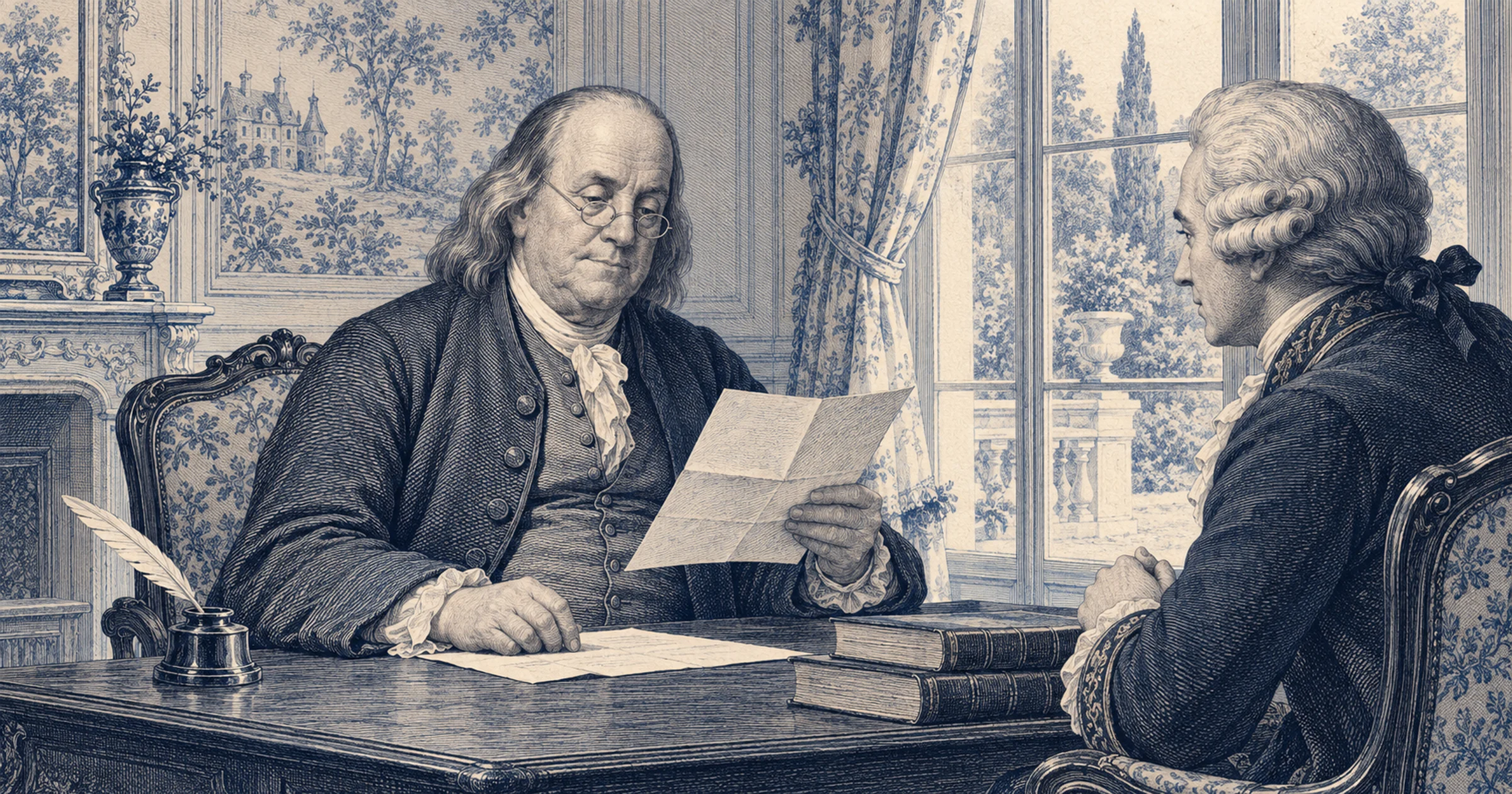
Benjamin Franklin went to France in 1776 to seek support for American independence. His work there gives you one short answer to a question on both versions of the civics test: U.S. diplomat. The State Department's account of his mission explains what that job involved.
The question you might hear
USCIS asks about Franklin in both question banks, with slightly different wording:
| Civics test | Question | Official wording |
|---|---|---|
| 2008 | 68 | What is one thing Benjamin Franklin is famous for? |
| 2025 | 85 | Benjamin Franklin is famous for many things. Name one. |
Both the 2008 study booklet and the 2025 questions and answers list "U.S. diplomat" as an accepted answer. Each question asks for one thing, so that answer is enough for this question. It is one possible question in the civics portion of your interview.
If you're choosing study materials, our guide to the 2008 and 2025 tests explains which version applies to you.
What a diplomat does
A diplomat represents a country in its dealings with other countries. That work can include asking for support and negotiating agreements.
For Franklin, the task was to persuade France to support American independence. He served on a commission to France from 1776 to 1778, and his home in Passy, near Paris, became a center of American diplomacy in Europe. The Office of the Historian describes both his assignment and his work there.
Picture the work behind the answer: Franklin in France, discussing what the new United States needed and what France would agree to do. That is a useful connection to make when you study the word "diplomat."
Why the agreement took time
France had already been helping the Americans secretly, but a formal alliance was a bigger commitment. According to the National Archives, King Louis XVI wanted to know whether the Americans could defeat Britain. News of the American victory at Saratoga helped convince him to approve a treaty.
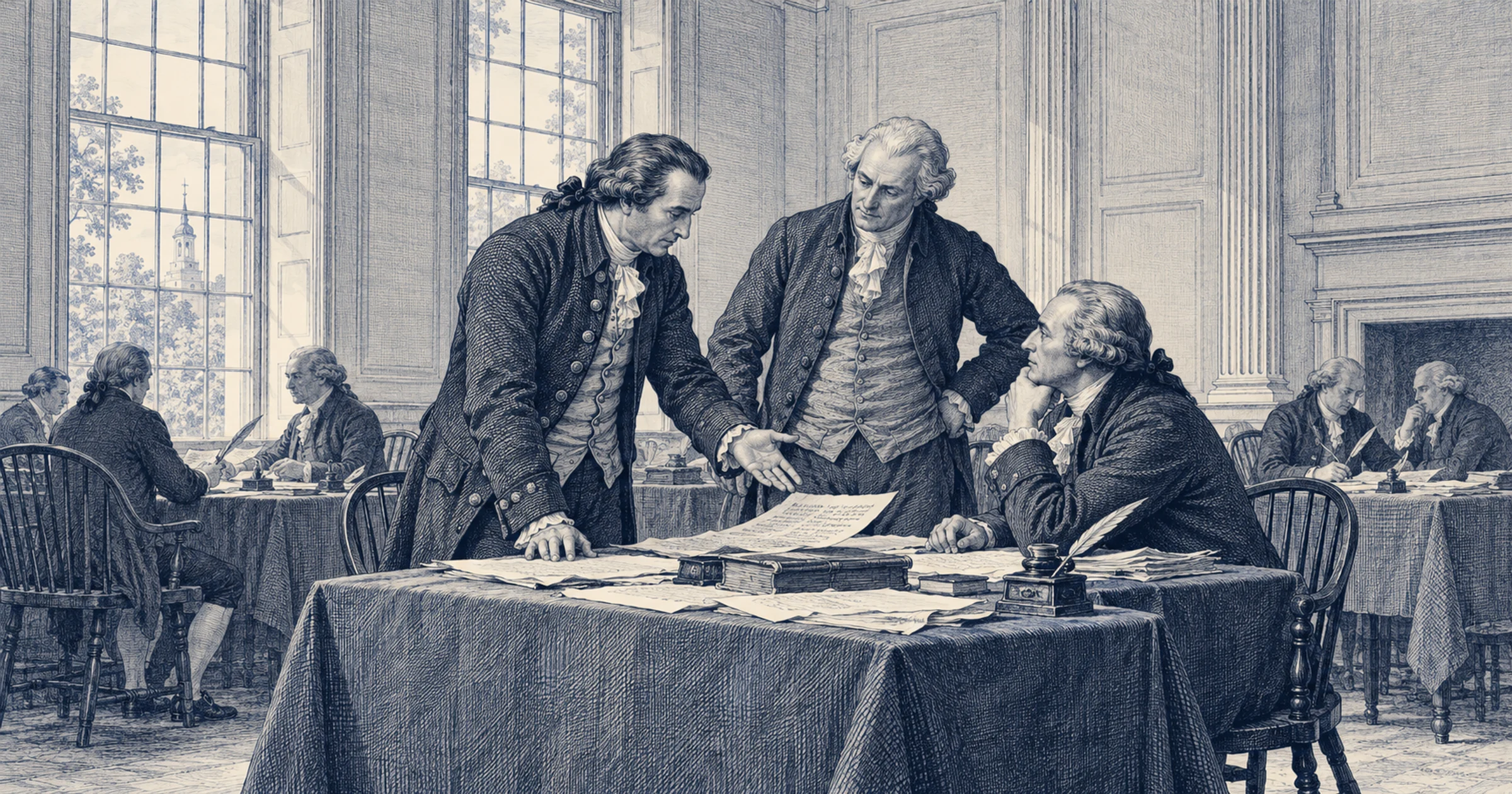
On February 6, 1778, France and the United States signed two treaties. One established an alliance; the other recognized the United States as an independent nation and encouraged trade. The State Department's history of relations with France names Franklin, Silas Deane, and Arthur Lee as the American commissioners who signed them.
Franklin worked with other representatives, and events on the battlefield affected the negotiations. Remembering that helps explain what diplomacy meant in practice: people working toward an agreement while a war was still being fought.
Practice the short answer
Read the question for your test version, then look away and say "U.S. diplomat" out loud. Use Franklin's mission to France as your reminder of what the answer means.
The story explains the answer; the official question asks you to name one thing Franklin is famous for. Both USCIS lists include other accepted answers too. If you prefer one of those, study its wording in the list for your test.
Sources
Checked October 26, 2026. Question wording and the accepted answer were verified through indexed excerpts of official USCIS publications; direct access to the PDFs was blocked during this check.
- Preparing for the Naturalization Test: A Pocket Study Guide, USCIS, question 68 (2008 test).
- 128 Civics Questions and Answers, USCIS, question 85 (2025 test).
- Benjamin Franklin: First American Diplomat, 1776–1785, U.S. Department of State, Office of the Historian.
- The Treaty of Alliance with France, National Archives.
- France: Recognition, Diplomatic, and Consular Relations, U.S. Department of State, Office of the Historian.